Showing posts with label B. Three Eagles. Show all posts

GHP Recommends: 2016 Books We're Excited About (Part II)

B. Three Eagles, author of forthcoming novella Book of Seidr in Element Alive series
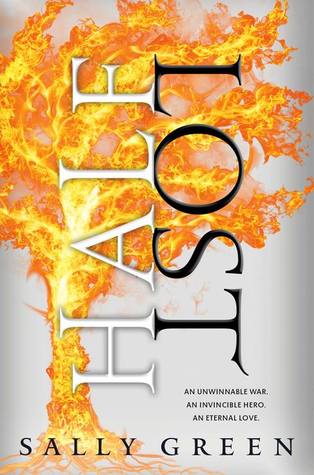
Half Lost by Sally Green

Half Lost by Sally Green
Nathan Byrn is running again. The Alliance of Free Witches has been all but destroyed. Scattered and demoralized, constantly pursued by the Council’s Hunters, only a bold new strategy can save the rebels from total defeat. They need the missing half of Gabriel’s amulet—an ancient artifact with the power to render its bearer invincible in battle.
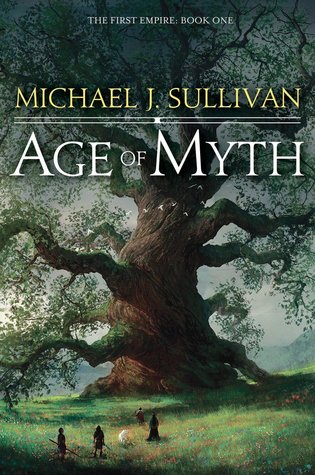
Age of Myth by Michael J. Sullivan
Age of Myth by Michael J. Sullivan
What does it mean if the gods can be killed? The first novel in an epic new fantasy series for readers of Brent Weeks, Brandon Sanderson, Peter V. Brett, and Scott Lynch.
Set in the world of his popular series, the Riyria Revelations, The First Empire series unveils new truths for Sullivan’s long-time fans while providing a great entry point for new readers.

Carrie White-Parish, CEO of Glass House Press, editor and publisher
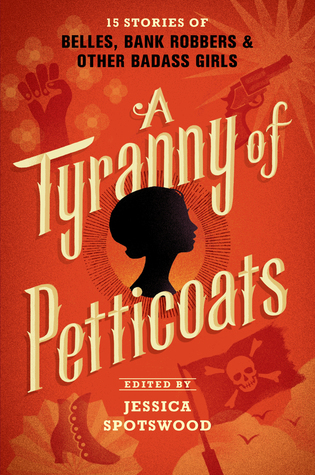
A Tyranny of Petticoats, edited by Jessica Spotswood
A Tyranny of Petticoats, edited by the very lovely Jessica Spotswood
I've been waiting for this for AGES.
Criss-cross America — on dogsleds and ships, stagecoaches and trains — from pirate ships off the coast of the Carolinas to the peace, love, and protests of 1960s Chicago. Join fifteen of today’s most talented writers of young adult literature on a thrill ride through history with American girls charting their own course. They are monsters and mediums, bodyguards and barkeeps, screenwriters and schoolteachers, heiresses and hobos. They're making their own way in often-hostile lands, using every weapon in their arsenals, facing down murderers and marriage proposals. And they all have a story to tell. 
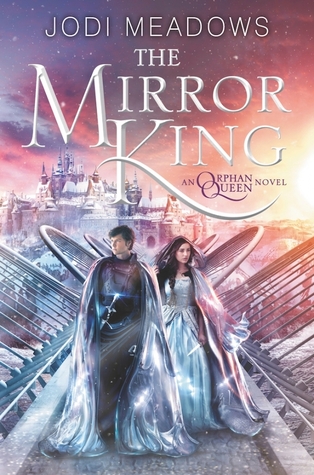
The Mirror King by Jodi Meadows
The Mirror King, also because I've been waiting AGES, by the lovely Jodi Meadows
Wilhelmina has a hundred enemies.
Her friends have turned. After her identity is revealed during the Inundation, Princess Wilhelmina is kept prisoner by the Indigo Kingdom, with the Ospreys lost somewhere in the devastated city. When the Ospreys’ leader emerges at the worst possible moment, leaving Wil’s biggest ally on his deathbed, she must become Black Knife to set things right.
The Returned by Victoria Schwab
Because I'm desperately hoping she can pull it off, and I want to know what happens.

George Ebey, author of the forthcoming Legend of the Phoenix (Phoenix Saga seriesand novella DEBBI (Rovers of Mars series
Freedom of the Mask by Robert McCammon
Freedom of the Mask by Robert McCammonWhy?  For one, I’m a lifelong fan of his work.  He could write the menu at Denny’s and I’d read it cover to cover.  But more so, this is the sixth book in his awesome Matthew Corbett series and I can’t wait to dive into that world once again.  (PS. If you don’t know about this series, you owe it to yourself to check it out).

A Rebel’s Stone by PT McHugh Ever since finishing the first book in the series, Keeper of the Black Stones, I’ve been dying to find out what Jason and the gang are up to.  I’m betting it’s going to be a wild ride.  


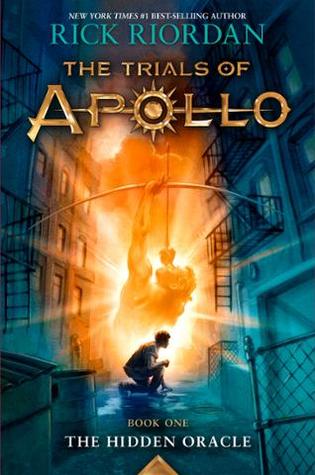
The Trials of Apollo: The Hidden Oracle by Rick Riordan Honestly, I just thought the premise sounded cool.  Greek Gods, Monsters, ancient powers, all set against the backdrop of our own modern world.  Sign me up.


Images from Goodreads and personal archive.

Excerpt: Book of Seidr by B. Three Eagles

She was walking along a sandy shore, cool grains rolling beneath her bare feet. Looking around, she frowned a bit. It was a beach, but which one … and where? She spied an old soil-and-straw Cobb house in the distance, rising ever so slightly from the tall grass just beyond the dunes, and her breath caught. It couldn’t be.
The thatched roof was caving under years of neglect, the small stone chimney beginning to crumble, but even in such dire shape, she recognized the cottage. Her childhood home. But how did she get there? This house—this beach—this was Iceland. How
Suddenly a massive thunderhead rolled in behind the cottage, dominating the sky as it loomed toward her with unnatural speed, roiling angrily. Thunder boomed, lightning striking the landscape, and a blaze erupting in its wake.
Eira was overwhelmed by a sudden sense of violent foreboding as the storm bore down on her. Something evil approached, a foul scent riding the winds of the storm. Eira didn’t know—she couldn’t know—what it was, but it was there. She could sense it.
Another bolt arced out, striking the dunes behind her in a crackle of electric fury that echoed and shifted, becoming a maniacal cackle, and the cloud above her twisted, transforming into a wicked face that grinned down at her, laughing with gleeful malice.
Loki! Eira screamed, stricken with terror.
Panicking—gripped by fear—she turned and dove into the icy waters of the sea, swimming without thought or reason, consumed by an inexplicable, yet desperate, need to escape. It was the devil, himself, and just when she’d thought she was finally safe. But he had found her, somehow… Found her and brought her here. She had to escape.
But the water grew choppy, frothing waves surging all around her, and before she could save herself, Eira went under, struggling against the current that tugged her down. She fought for her life… Her head broke the surface… She gasped for breath … and saw to her horror that everything around her had flipped upside down.
She was underwater again, her lungs filling with thick, salty water as she inhaled. It burned beyond words.
The searing sensation of the sea in her lungs—her heart racing as though it may burst—hurt like hell, but somehow, she didn’t drown. Aside from the pain and panic, she … seemed fine. She floated, weightless beneath the waves, and somehow, she was just … fine.
Then a stream of bubbles rose from the shadowy depths, calling her gaze down. Below her, ruined buildings littered the ocean floor, remnants of some ancient civilization long since destroyed. They were scarcely recognizable—anyone else would have thought them little more than scattered spires of stone, if not for the obvious symmetry of the structures. Small depressions marred the surfaces of most—windows, she decided, though it was just a guess. The combination of erosion and deposition had rendered them utterly blank. A few more years and no one would know the difference—just another strange formation created by the tides, which would have washed away any evidence to the contrary.
Nothing could live there, and nothing had for some time—how could it? In her short time beneath the icy waters, Eira hadn’t seen even a single fish. What could live in such dark, desolate depths, except the ghosts of a world now lost? Yet there was something… Somehow, the streams were growing thicker, a swirling curtain of bubbles engulfing her, hinting that she wasn’t alone. Something was down there—something big, hidden within the wavering gloom.
Eira frowned, her brow knotting. Was that movement!? An illusion cast by the liquid haze? She couldn’t tell. Her body tensed, jaw clenched and heart racing as she peered into the watery twilight, waiting … silently praying that she was imagining the whole thing.
And then a long shadow slid languidly from amid the buildings, slowly revealing its ophidian nature. Eira’s heart stopped and her blood turned icy, frozen with terror—renewed and redoubled—as the demon revealed itself.
Jormungandr? The Midgard Serpent—cursed son of the devil, Loki—condemned by the gods to an eternity beneath the waves. The legend was older than time, and Eira had never truly believed it.
Now, it seemed, she wouldn’t have a choice.
Then, without warning, the monstrous serpent exploded into view and sped toward her, its cavernous jaws gaping to reveal venomous fangs. Eira screamed, her horror escaping as a bubbling stream of her own, and tore at the water in a vain attempt to out-swim the creature.
But the ocean floor ripped open, creating a massive whirlpool, and the water drained into the rift, swallowing the serpent. Eira swam with all her strength to avoid being sucked down into the watery abyss along with it. Driven by sheer instinct—the need to survive and the dread of horrors unknown—she fought the current, futile as it was to even try, slipping ever closer to the hole despite her efforts. The force of the vortex wrenched her down into the ruined buildings, then further still, bombarding her with debris as the city was razed, its stones joining the maelstrom.
The gaping, jagged maw drank the sea with seemingly insatiable thirst. And the closer she drew, the harder she swam. But the vortex only pulled harder.
Suddenly her feet disappeared beyond the edge of the rift. She was losing. Eira grasped at the sea floor in hysterical frenzy, searching for an anchor—anything that may save her—
And then the water was gone.

Eira was lying face down beside a gaping chasm. 

B. Three Eagles is a long time doodler, freelance designer and artist. She comes from a mixed background of Native American and Gaelic cultures, both of which are celebrated in her daily life. Since childhood, B. has kept journals of random daydreams and short stories, but didn't officially delve into the world of writing (you know, for other people) until the summer of 2010.
She currently lives in the foothills of the Ozarks mountain range with her husband and daughter.
Her debut novella, Book of Seidr is set to be released in 2015 as an introductory prelude to the first novel of the series, Lady Valkyrie n Element Alive series.  

Native American Heritage Month - a guest post by B. Three Eagles

For this Native American Heritage Month, I’m sharing a collection of books that have been impactful for me personally. Everyone approaches history differently; many people want only the facts, while others prefer narratives that give just a general idea of the events, but a more personal view of the experience, and some still want less of the truth and more of the feelings of the author. I have tried to include at least one of each type, so that every reader can find something to enjoy. 
It would be worth noting that not all of these books are about Native American history, though. Some are more modern, personal accounts of an individual's life. I tend to enjoy autobiographies the most—after all, who better to tell a story than the person that lived it? And the few I highlight here are each iconic in their own right. 
I also want to point out that the American version of this history is very different from the Native American version. That is, in the end, why Glass House asked me to write this blog—and why we’ve been featuring Native American characters this month. If this is your first time delving into the topic, you may be surprised (and not pleasantly) to hear the stories from the other side. Remember as you go in, though, two things—both sayings I’m sure you will have heard. First, there are two sides to every story, and second, history is always written by the victor. 
And even those who’ve never delved into Native American history know who the victor was. Which means, of course, that if you get into these books, you’ll be reading an entirely different version of the story! Which is … well, the point, isn’t it?
Another warning, though: The stories from this period of our history are most often sad. But there is also a strength there, an indomitable will to survive, and that pertains not only to life itself, but culture and tradition, as well. This is the part that I find the most worth in sharing, and I thank all the authors that have written their stories for the world. To show us their pain may be hard, but to share their triumph over it is inspiring.
~ B3E

Bury My Heart at Wounded Knee by Dee Brown
1. Bury My Heart at Wounded Knee by Dee Brown
Bury My Heart at Wounded Knee displays, once and for all, how the West was truly won. Dee Brown presents the intentional, systematic destruction of the American Indian during the second half of the nineteenth century, painting a heart wrenching and blood-soaked mural that is difficult to ignore. 
The information cited is fully documented. Using council records, autobiographies, and firsthand descriptions, Brown allows the tribes to tell of the events that finally left them scattered, broken, and defeated. Their words create a disturbing narrative, told with such emotion and forceful clarity that I was left with only one thought as I finished reading: the blood, sweat, and tears that built this country poured first from the Native American.

My Life Is My Sun Dance (Prison Writings) by Leonard Peltier
2. My Life Is My Sun Dance (Prison Writings) by Leonard Peltier
"Those who put me here and keep me here knowing of my innocence can take grim satisfaction in their sure reward, which is being who and what they are. That's as terrible a reward as any I could imagine. I know who and what I am. I am an Indian--an Indian who dared to stand up to defend his people. I am an innocent man who never murdered anyone nor ever wanted to. And, yes, I am a Sun Dancer. That, too, is my identity. If I am to suffer as a symbol of my people, then I suffer proudly. I will never yield."
   ~ Leonard Peltier
If one man's life could represent the entire scope of what his tribe endured as the West was conquered, Peltier would probably be that man. I admit to my own bias, here—I do believe him innocent, though he was sentenced to two life sentences for crimes that FBI agents and other government entities admitted he could not have committed. He is a political prisoner, but also a humanitarian, well known for his non-violent style of defending Indian rights; he is even sometimes referred to as the Nelson Mandela of the America Indian people. 
This is his memoir—his manifesto—and a disturbing chronicle of his life behind the bars of Leavenworth Prison. Sun Dance is an extremely sacred ceremony in which pain and personal sacrifice lead one to transcend reality; Peltier compares his suffering and the insights he has gained to this ceremony.

The Earth Shall Weep: A History of Native America by James Wilson
3. The Earth Shall Weep: A History of Native America by James Wilson
The Earth Shall Weep is a well-written, but utterly shocking revelation of American history, containing all the information that every American should have, but are unlikely to ever be taught. And you don't have to be naïve about the relationship between the settlers and Natives for this book to shock you; I was raised with 'the other side of the story' and still found it hard to read a few parts.
Quite fittingly, James Wilson quotes the historian Francis Jennings, who observed that "the American land was more like a widow than a virgin. Europeans did not find a wilderness here; rather, however involuntarily, they made one." Combining the age-old historical sources with new insights from ethnography, archaeology, Tribal oral tradition, and a lifetime of his own original research, James Wilson delivers proof of the statement in this historical narrative, charting the collision course between Euro-Americans and the Natives. From the earliest interactions and clashes that followed, to the rising political force of Native American activists today, The Earth Shall Weep chronicles the destruction, but also offers the author's own guarded optimism, highlighting how many tribes have managed to preserve and even rebuild their cultural identities.

The Jailing of Cecelia Capture by Janet Campbell Hale
4. The Jailing of Cecelia Capture by Janet Campbell Hale
The Jailing of Cecelia Capture is a fictitious story about a woman that is struggling to find herself in the wake of a lifetime of loss, abuse, and sadness. The main character, Cecelia, is trying desperately to balance her troubled past with her hope for the future. Being mixed-race, trying to find her place in society, attempting to discover who she is and what that means—Cecilia is a complex and sometimes melancholy character struggling against a system seemingly built to make her fail, though she consistently refuses to do so. From a childhood spent with an alcoholic full-blood father and a crazy half-breed mother, to the string of ill-fated love attempts of her adulthood, Cecelia seems hopelessly destined to be mistreated and alone. Searching for some sort of meaning—an identity that doesn't involve endless pain—Cecelia goes back to the Idaho reservation where she was raised. Reclaiming her Native American identity brings a new sort of purpose to her life, bolstering her and helping her to move on.
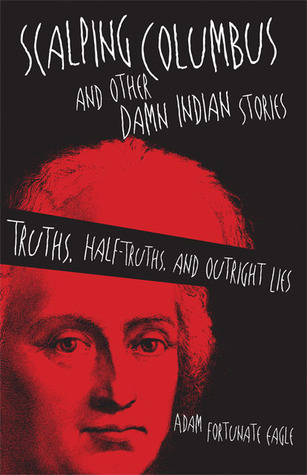
Scalping Columbus by Adam Fortunate Eagle
5. Scalping Columbus by Adam Fortunate Eagle
Scalping Columbus is an autobiography ... sort of. The book is comprised of short stories from the author's own life, but on the cover, in the foreword, and a few times more throughout, the author reminds you that he reserves the right to embellish, exaggerate, and outright lie wherever the story calls for it. For the stories aren't just events as they happened, but how he saw them or perhaps wanted them to happen. How many times have we all seen or done something, and then later played the events back differently in our mind, changing the outcome or tweaking the details to satisfy our own vivid imaginings of what could have been?
Fortunate Eagle presents himself as a contrary warrior—a trickster—battling for Indian rights through humorous and satirical stories that certainly make statements. Sometimes he may teach a bit of his culture, other times he points out discrepancies with the status quo or details what he believes to be outright injustices committed against himself and/or his people, but he always does so in a way that is thoroughly entertaining, making the reader laugh so much that they almost don’t realize they’ve just learned something.

Fools Crow by James Welch
6. Fools Crow by James Welch
As a work of historical fiction, Fools Crow is a powerful and dramatic exploration of the cultural clash between the Native Americans (particularly the Blackfoot) and the American settlers. Fools Crow is a young Blackfoot warrior during the late 1800s, during the time when tensions were probably at their highest between the new settlers and the indigenous tribes. The "native" language style (i.e., days counted in 'sleeps,' months in 'moons,' and so on) delves us immediately into the midst of the Blackfoot encampment, breathing believable life into the characters and setting the tone for the story. 
Fools Crow is the true center of the story—his life, interactions, etc.—with the outside conflicts being almost secondary to the rich portrait of his tribal life. Written by a modern tribemember, Fools Crow does not attempt to romanticize Blackfeet culture, portraying them as 'noble savages.' Instead, Welch offers the reader a look at a different world—the values and struggles, culture and beliefs—with many details, providing a rare and vivid insight into a way of life that is all but lost.

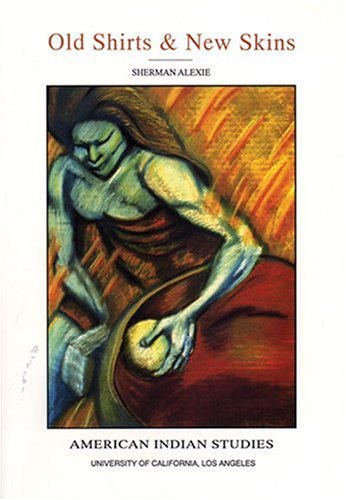
Old Shirts & New Skins by Sherman Alexie
7. Old Shirts & New Skins by Sherman Alexie
This is, perhaps, an odd one for this type of post. A collection of poems does not usually merit mention on a 'book list,' but I assure you, this one does. By now, most of you have probably heard the name Sherman Alexie. As an author of several popular novel-cast short story collections, he has gained notoriety in these past few years. Yet most of his fans have never explored any of his earlier work. Presumably, this is because of its poetic structuring. I find this sad because, in poetry, there is a certain lack of rules—a freedom to say what you mean however you wish to say it—and a surplus of emotion and power tends to come through, unrestrained, because of this.
On this note, I highly recommend Old Shirts & New Skins. The collection is a brilliant look into the mind and heart of one of Native America's best modern authors. The poems link present struggles with historical slaughters—the Indian wars. But it's not the Indian wars as you know them; it’s the untold story of the other side—the Native people defending their way of life. Alexie correlates the two through poem, then pairs his own work with beautiful illustrations by Elizabeth Woody, wrapping the whole into a masterpiece of unfortunate history and creating a gritty, raw, and sometimes angry present, and promising a focus and determination to come (which, as we all know, he has gone on to deliver).

B. Three Eagles is a long time doodler, freelance designer and artist. She comes from a mixed background of Native American and Gaelic cultures, both of which are celebrated in her daily life. Since childhood, B. has kept journals of random daydreams and short stories, but didn't officially delve into the world of writing (you know, for other people) until the summer of 2010.
She currently lives in the foothills of the Ozarks mountain range with her husband and daughter.
Her debut novella, Book of Seidr is set to be released in 2015 as an introductory prelude to the first novel of the series, Lady Valkyrie n Element Alive series.  


All cover images from Goodreads.

GHP Recommends: Thanksgiving Reads

Holiday season is almost in full swing, and most of Glass House will be celebrating Thanksgiving soon. And to celebrate the holiday--as well as importance of cultural diversity, and our take on what American history really means--we gathered a list of reads with that in mind. Take a gander, and comment if you've read any of the pieces, or have recommendations of your own!

The Bonesetter's Daughter by Amy Tan
Jessica Gang, editor at Glass House Press
The Bonesetter's Daughter by Amy Tan. If you have ever read an Amy Tan book, you understand how talented she is and how touching her themes are. The Bonesetter's Daughter is no different. This novel is about Ruth, a successful first-generation Asian American living in San Fransisco and dealing with the decline of her mother's mind to Alzheimer's. But the story is about so much more than that. It's about acceptance and understanding--the acceptance of ourselves and the understanding of where we come from. It is about forgiveness and empathy. It's a story about love and healing. It is about culture and embracing the differences that make us who we are. This quote from the book always sticks with me: "You can have pride in what you do each day, but not arrogance in what you were born with." I love this book--and Tan's other books as well--and highly recommend! It's a great Thanksgiving read; it has family, the melding of cultures, and thankfulness in its purest form.

Sister of my Heart by Chitra Banerjee Divakaruni
Abby Keeble, publishing assistant at Glass House Press
Sister of my Heart by Chitra Banerjee Divakaruni
In Chitra Banerjee Divakaruni's Sister of my Heart, Sudha and Anju are cousins growing up in the upper caste of Calcutta. The two are inseparable, constantly at each other’s side, until Sudha learns the truth about their family, making her feel distanced from her beloved cousin. The two girls drift apart, and then are firmly separated by their arranged marriages. Sudha remains in India while Anju moves to America with her husband. As each struggles on either side of the globe, they turn to each other for help and support, rekindling their friendship and relying on each other as they navigate their separate but intertwined lives. This book is a must read for insight into Indian society and the institution of arranged marriage.

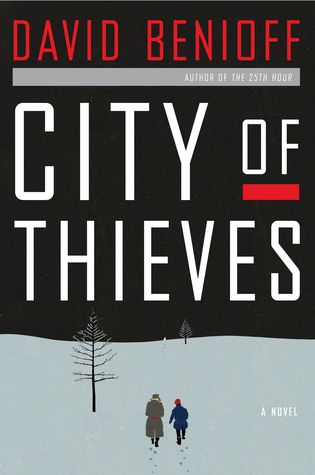
City of Thieves by David Benioff
George Ebey, author of the forthcoming Legend of the Phoenix (Phoenix Saga seriesand novella DEBBI (Rovers of Mars series
City of Thieves by David Benioff. During the Nazi siege of Leningrad, a teen named Lev Beniov is arrested for looting and is tossed into a cell with a deserter named Kolya. Just hours away from the firing squad, they are spared at the last minute by a powerful Soviet Colonel who has a special job for them. His daughter is about to be married, and he wants them to find a dozen eggs for her wedding cake. This is a near-Herculean task in a city that is choked off from all supplies and suffering under the boot of the ruthless Nazi invaders. What follows is a true odyssey as the two set out to do the impossible in darkest depths of the lawless and war-torn Leningrad. I found this to be an entertaining adventure as well as a fascinating portrayal of the Soviet experience during the Second World War. Highly recommended!

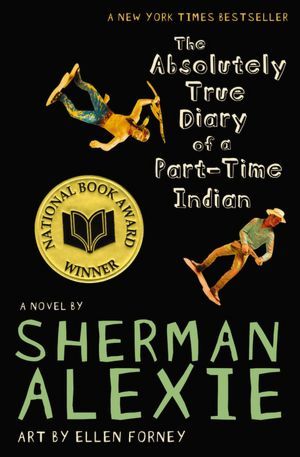
The Absolutely True Diary of a Part-Time Indian by Sherman Alexie
The Absolutely True Diary of a Part-Time Indian by Sherman Alexie. Junior has attended forty two funerals in his life. He's fourteen years old. Growing up on a Spokane Indian Reservation, The Absolutely True Diary follows Junior as he seeks to figure himself out and his place in the world. Determined to take control of his own future, Junior leaves his Reservation school (where his textbook is the exact same textbook his mother studied from) to attend an all-white high school, where the only other Indian is the school mascot. A budding cartoonist, the author illustrated the book with brutally cutting comics that add a whole new layer to an already complex and poignant story. It came highly recommended, and it lived up to my expectations. I laughed and cried a lot. Sometimes at the same time. This book hurts, but in a way that leaves you feeling like it was worth the pain.

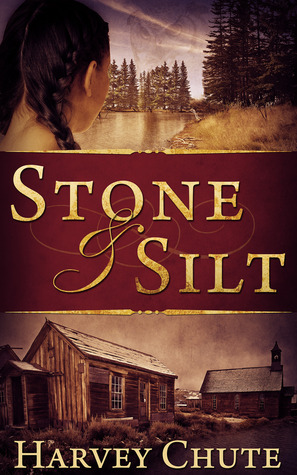
Stone and Silt by Harvey Chute
Stone and Silt by Harvey Chute. Life in 1800s British Columbia isn't easy for 16-year-old Nikaia, who is bullied and called a "half-breed" for having a Native mother. Things are further complicated when she stumbles upon a stolen cache of gold. When the police find a dead man nearby, her father becomes a suspect. Nikaia races to find answers and save her family. Meanwhile, she also explores her blossoming feelings for Yee Sim, the quiet Chinese boy whose parents run the local store. A beautifully written YA historical mystery, Stone and Silt combines the thrill of mystery with thoughtful depictions of Native culture and life in the 1800s.

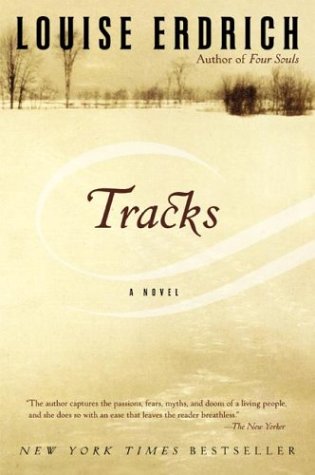
Tracks by Louise Erdrich
B. Three Eagles, author of forthcoming novella Book of Seidr in Element Alive series
Tracks by Louise Erdrich. Tracks is the third in a trilogy of novels, but it is earliest chronologically, so I recommend new readers start here and, if you like it as much as I did, move on into the saga.
Tracks explores the interrelated lives of four Anishinaabe families living on an Indian reservation in North Dakota, told through the alternating first-person narratives of Nanapush, a tribal elder, and Pauline, a young half-blood girl. The story centers around events between 1912 and 1924, while the tribe was still struggling to keep their remaining lands. Over the ten-year span, tribal land was growing more and more scarce, mirrored by the trust of the people. People were pushed to the edge, friendships were forged only to be lost, and families were torn apart as they struggled to survive--to find their place in the ever changing world.
Nanapush is probably my favorite character; I associate him strongly with the coyote from the old lore. His trickster qualities help him throughout, and he claims, in his own defense, that “it is the tricksters who survive to build a new world on the ashes of the old.” In the tension between the Anishinaabe and the whites, he shows remarkable resilience, navigating both sides of every conflict, as any trickster would. He's a prankster of sorts, but one could argue that his intentions are good; mostly, I saw him as the kindly, comedic, mischievous-but-harmless, and ultimately lovable sort. Pauline is something else, entirely; she acts mostly as an observer to the main events, but somehow, for me, always feels like an antagonist. As a teenage girl of mixed descent, she abandoned the traditional ways of her family, deciding to be more 'white.' She meets Fleur (Nanapush's daughter) and is initially drawn to her power, but eventually falls into jealousy and obsession, furthering, if not creating, a lot of the conflicts that Fluer faces.The narration is unique in that, at times, the voices seem strangely unreliable. It may sound odd, but this is one of my favorite things about this book, as well as many of Erdrich's other works. As we view the story through the eyes of each character, we are truly seeing them as they would, with themselves right and their opponent wrong, or their inability to see their own fault when such conflicts arise. Its a beautiful portrait of the human condition in that aspect.

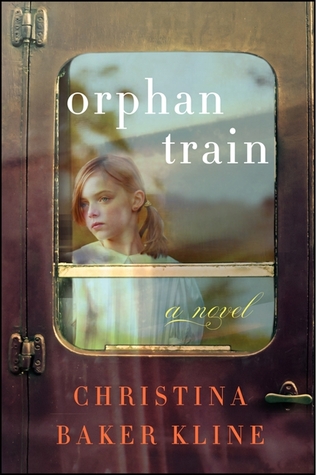
Orphan Train by Christina Baker Klein
Carrie White-Parish, CEO of Glass House Press, editor and publisher
Orphan Train by Christina Baker Klein. This book features two main characters: an orphan of Native American descent in the present, and an orphan of Irish descent during the 1800s, when orphans were moved by the thousands from New York City to 'adoptive' families in the Midwest. Although Molly, the Native American character, focuses only briefly on her heritage and background, those few pages are powerful in their effect, and in highlighting the experience of many modern-day Native American children. Having lost her mother and father at an early age, she's been moved from the squalid trailer in which they lived to a number of foster homes, none of which fit. We see a picture of a girl who grew up in poverty, on a reservation and amidst people that she both needed and didn't fully understand. Then, thrust into the Western world, and torn from her heritage, she finds herself in home after home with people who can't sympathize with her background, and therefore mistreat her. When eighteen-year-old Molly meets ninety-year-old Vivian, they begin to share their stories of grief and alienation at the hands of 'the system,' and once again find a sense of family and belonging. This is a lovely story that left me sobbing, and I'd recommend it to anyone with a love of history and coming-of-age novels.

All images from Goodreads.

September Wrap-Up

Autumn is starting and we could not be more excited about that! September was a busy month for Glass House and if you missed what was going on, you're in luck! We're here to recap!

WE HOSTED ...
Tash McAdam, author of SLAMBlood in the Water, forthcoming Maelstrom (The Psionics series) and Warp Weavers series, who posted about back-to-school reads.

George Ebey, author of the forthcoming Legend of the Phoenix (Phoenix Saga series), who talked about gaming and books, and may have also teased about DEBBI a little bit...

Carrie White-Parish, CEO of Glass House Press, editor and publisher, who reviewed her holidays reads and shared some Hawaii shenanigans with us.

Mary Fan, author of The FiredragonFiredragon RisingTell Me My Name, forthcoming Flynn Nightsider and the Edge of Evil (Flynn Nightsider series) and Fated Stars series, who will be at KidLitCon soon and she wrote a post about it. Don't miss her if you'll be in Baltimore!

SHINY! AUTHOR IN THE SPOTLIGHT IS ...
B. Three Eagles, author of forthcoming novella Book of Seidr in Element Alive series. Read a smashing interview with B. and get to know her!

GHP RECOMMENDS ...
... or shares memories of school reading assignments. You think it was easy on English majors and editors? Think again!

PST, WE HAVE SOME INSIDER INFORMATION!
Carrie wrote a quick post about what it takes to publish a book

HAVE YOU SEEN? 
- Mary Fan's Firedragon got another really nice review
- Try to score a freebie by emailing Tash McAdam
- Our TBR saw some new additions
- Spotting our books out in the wild!
- A peek into an editor's projects mountain
- We shared a post about YA readers and what they want
- Tash McAdam's SLAM got a lovely review on Smorgasbord blogYou can read SLAM in parts on Wattpad!
- Tash's second novella Blood in the Water was a hit on Reader's Favorite.
- Mary jumped in on #62MillionGirls tag on Twitter
Writing is a lot of work sometimes!
... as is editing, as Carrie can tell you.

WHAT HAVE OUR AUTHORS BEEN UP TO?  
- B. Three Eagles had a short sneak peek on the blog, and we cannot wait to show you the rest of the novella!
- Tash McAdam had a surprise cover reveal of Maelstrom, book one in The Psionics series. Drool over the cover here or head over to Tash's blog to get some bonus content! You'll also find some short ficlets there to bridge over the wait for the novel.
- Tash hosted and interviewed R.A. MarshallPhilip Harris, Heather Hamilton Senter and Rachel Medhurst over on the blog. Tash also shared A Newbie's Guide to Publishing.
- As a guest and an interviewee, Tash appeared on Book Goodies blog.
- Mary Fan posted a flash fic by Jason Parent, celebrated national literacy day with a lovely infographic, discussed self-imposed writing deadlines, and interviewed Jacqueline KyleAndrew Joyce and Seth Dickinson. She also talked about her publishing road so far.

LOOKING FORWARD TO ...
KidLitCon! Halloween! Novellas! Christmas! Oh wait, we got a bit ahead of ourselves. But stay tuned for Mary's KidLitCon recap and spooky reads recs on the blog!

Excerpt: Book of Seidr by B. Three Eagles

     Still, it made her sad to think of Cayden being so alone. She was an old woman, after all. What would happen to her granddaughter when she died? Who would she talk to? What would she…
     Eira’s gut clenched into a hard knot. She pitched forward as a burst of painful realization exploded through her head like a spike being drive into her skull. Her ears hummed—an electrical reverberation blocking out all other sounds—a cackling crackle of gleeful, sinister laughter—  
     “Gramma!? Are you okay!?” Eira heard Cayden cry out, vague and distorted.
     She couldn’t respond. Her body was quaking. She clutched at the table, trying to steady herself, as one thought—one undeniable truth—echoed within her mind like lightning, striking her over and over.
     ‘I am going to die…’ 


B. Three Eagles is a long time doodler, freelance designer and artist. She comes from a mixed background of Native American and Gaelic cultures, both of which are celebrated in her daily life. Since childhood, B. has kept journals of random daydreams and short stories, but didn't officially delve into the world of writing (you know, for other people) until the summer of 2010.
She currently lives in the foothills of the Ozarks mountain range with her husband and daughter.
Her debut novella, Book of Seidr is set to be released in 2015 as an introductory prelude to the first novel of the series, Lady Valkyrie n Element Alive series.  

Meet the author: B. Three Eagles

Author Brooke Three Eagles
B. THREE EAGLES


What's your super power?
Making things weird. 

If you knew you'd die tomorrow, how would you spend your last day? 
If I could do anything—money was no limit, etc.—I would fly to Rome and sneak into the basement of the Vatican to see what all the fuss is about. I’ve heard all kinds of conspiracy theories about secret treasures supposedly hidden in there—apparently that’s where they hide all the really cool stuff that we regular folks aren’t supposed to know about—and I have this compulsive obsession for exploring the strange and mysterious. If it’s as awesome as everyone claims, that would be an epic last adventure.

Realistically, though, I’d probably just grab my closest friends and family and head out into the woods for a trail ride, maybe find a creek to play in along the way, and end up sitting around a fire somewhere, roasting some dinner and having a fireside jam session (acoustic, of course). Some of my best memories are just hanging out around a campfire with friends, telling stories and singing songs; it’s timeless and, for me, priceless. Maybe not epic, but still awesome.

In which way would you like to make a difference in the world?
This is kind of a difficult question to answer. I mean, without even really trying, I think anybody can look at the world and find a handful of things they would like to change. It’s hard to know what difference those changes would actually make, though. 

I can’t pinpoint one specific, all important thing I would change. More than anything, I would just like to find a way for people to live in balance with the planet and everything else that has to share it with us. Our day to day lifestyle is so destructive, and there really is a better way. It wouldn’t necessarily be easy, and I know it’s not something that I or any one person could do by themselves, but I would love to be a part of the effort in building towards that future.

You're lost in a desert and … 
I’m lost in a desert and I’m freaking miserable. No trees, no water—it’s my own personal hell. I’m all for sunshine on a hot summer day, but the only sand I like is the sand along a shoreline. So I trudge along, delirious and irritated, following the unreachable mirage of a pristine swimming hole. 

Suddenly, the ground starts to quake. A rift opens in front of me. ‘SARLACC!’ My brain screams franticly. I feel a rush of relief for the lack of teeth surrounding the hole, but now I’m gripped with apprehensive curiosity for what else it might be. A strange whirring noise fills the air—a soft, mechanical purr—and, despite my trepidation, I approach the hole, searching for the source. Stopping a few feet from the edge, I lean forward to get a look, but then fall back as a silver, saucer shaped object darts out from within the chasm. The noise grows louder—the saucer is hovering above me now. A small hatch opens, bathing my skin in eerie blue light and leaving me tingling all over.

The next thing I know, the sand is gone. I’m in a small room with metal walls. The ceiling and floor are translucent; I can see the sky above and the desert below. A section of the wall slides away with a hiss, leaving me face to face with a strange being. I can’t say what it looks like. I can see it, but I can’t seem to remember, even for a fraction of a second, what I’m seeing. The creature might as well be invisible.

Moments later I’m sitting in the cockpit of the strange craft, conversing with this being I’m still not sure I can see. The desert whips by beneath us, eventually giving way to a coastal region and, finally, the sea. All the while, the being is telling me the most intriguing tale of a world within our world. Apparently aliens aren’t alien at all; they come from inner-space, not outer. They are as sentient to our planet as we are, but they live in the center instead of on the shell. They don’t come topside very often anymore, on account of how many of them have ended up on a table in a lab somewhere, being dissected like frogs in a high school biology class. Apparently they find the practice offensive. 

The pilot prattles on, speaking broken English, and with a very thick accent, and the landscape continues to change as it whips by below. Before I know it, a familiar sight looms into view—an overgrown drive at the base of a hill. The creature seems to know that this is my stop. It hands me a weird object—some kind of rainbow-ish metal disc—and says for me to call if I ever need a ‘Transport Across Xenolith Interplanetary’, or T.A.X.I, again. 

Unfortunately, I can’t read the ‘card’. Its iridescent surface is lightly etched with squiggles and lines unlike any letters or numbers I’ve ever seen.

Oh well. At least I’m out of that damned desert.

Who is your hero and why?
My mom, hands down and without question. I know it may sound kind of cheesy, but she is a real life superhero. As a single mom with three kids, she worked 12-16 hour days at the hospital (saving lives, like any good hero), kept up with the house and homework and everything else that goes into raising children, and somehow still found time to coach little league and basketball. She’s compassionate and kind, and always optimistic, no matter how bad things may look. Through all of the hardship and struggle, she always kept her chin up and saw us through. I don’t know how she did it.

I get my stubborn—refuse to fail—outlook from watching her take on so many obstacles and never give up. I mean, hell, if she can do all that, anything I might face pales in comparison.

What were you doing the last time you looked at a clock and realized you had lost all track of time?
Researching the 13th month, which was apparently stolen from our calendar. Most people don’t know this, but many of the old tribal/clan based peoples (i.e. the Celts, Native Americans, Norse, etc.) operated on a thirteen month calendar. I kind of happened upon the topic accidentally while I was looking up something else and next thing I knew, several hours had passed and I had a small book’s worth of pages bogging down my printer.

What book do you think everyone should read?
The Machine Stops by E. M. Forster
Source: Goodreads
The Machine Stops by E. M. Forster; an iconic example of how the science fiction of today is just the future of tomorrow. First published in The Oxford and Cambridge Review in November 1909, this book, to me, is the epitome of what sci-fi is all about.

Ray Bradbury once said that science fiction is the sociological study of the future—things that the writer believes are going to happen by putting two and two together. The Machine Stops proves Bradbury’s statement, as well as Forster’s talent for making such deductions. He wasn’t completely accurate in every aspect (at least, not so far), but many of the technologies he ‘invented’ are now present, at least in a similar form, such as instant messaging and the Internet. Forster foresaw that people would have a large number of friends they had never met in person, and that they would even prefer it that way. He highlights the ever growing disdain for direct experiences (seeing, smelling, or touching anything for yourself) which, in the book, is actually the main character’s greatest fear. 

This story was pretty iconic for me, one of those that you read and never quite manage to forget. Even now, years after first reading it, the story kind of haunts me from the back of my mind, reminding me never to be too busy to go out and experience something new. I believe that our lives are our stories, every day is a page. Our experiences are important, good or bad, because they create our plots, build our characters, and, ultimately, make up our lives. Who wants to read a book with blank pages?

Favorite quote from the book, spoken by Kuno with his last breath: "I am dying - but we touch, we talk, not through the Machine."

What kind of world ruler would you be? 
Probably a terrible one. I don’t think I would make horrible choices or anything like that, but I doubt I would be very well liked. I’m too honest to be a politician, what with all the shenanigans and lobbying that goes into it. I’d have one good public address—my inauguration speech, most likely—and be impeached or assassinated. 

Wow us with something we do not know.
I can read several archaic forms of ‘writing’, though, admittedly, some better than others, including five rune systems and two types of Native American pictographs. With some of these systems, it’s almost impossible to read them without making a mistake the first time through, since many of the symbols’ meanings change based on the context.